
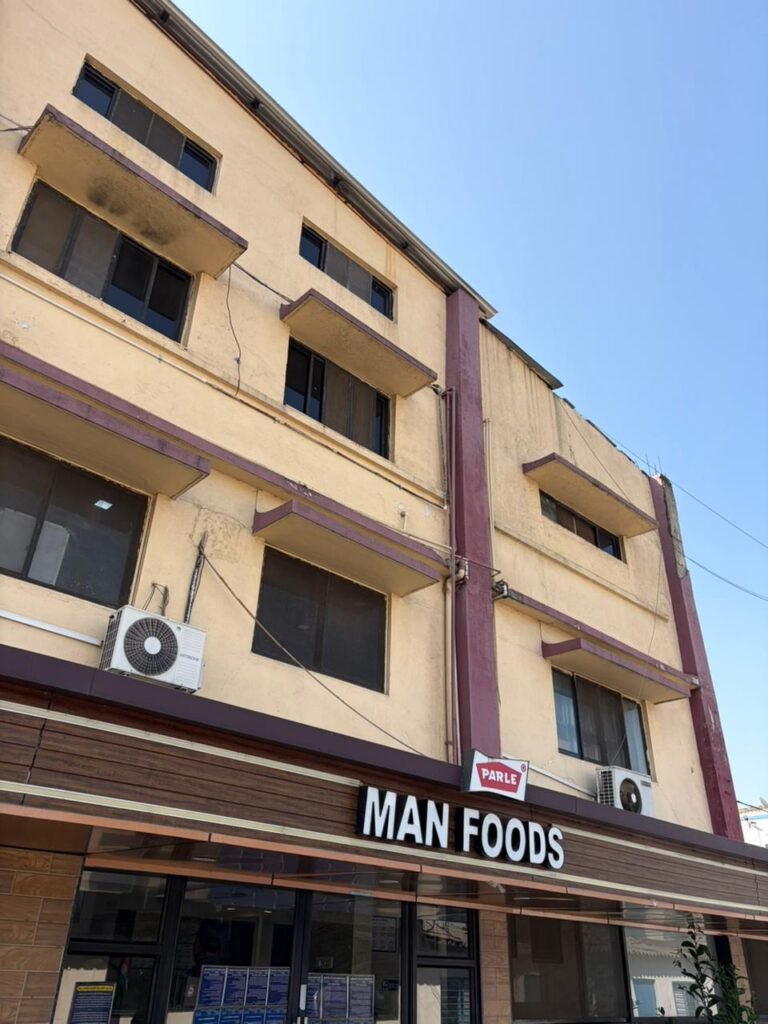
Industrial visits play a crucial role in bridging the gap between classroom learning and real-world industry practices. Our visit to Manfoods Pvt. Ltd. in Silvassa, a manufacturing partner associated with Parle, was an enriching experience that provided deep insights into the FMCG (Fast Moving Consumer Goods) industry. The visit allowed us to witness the entire manufacturing process, understand large-scale production systems, and learn about the legacy and achievements of the iconic brand Parle.
Understanding the FMCG Manufacturing Environment
The manufacturing facility at Manfoods Pvt. Ltd. operates with a strong focus on efficiency, hygiene, and precision. As an outsourcing manufacturing plant associated with Parle, the facility plays a key role in producing high-demand FMCG products.
The plant demonstrated how large-scale manufacturing facilities operate using systematic production flows, quality control measures, and automated machinery. From the moment raw materials enter the plant to the final packaging stage, every process follows strict operational standards to ensure consistency and product quality.
The Parle Manufacturing Process
One of the most exciting aspects of the visit was observing the complete Parle product manufacturing process. The factory team explained how raw materials such as flour, sugar, edible oils, and other ingredients are carefully measured and mixed to maintain standardized product quality.
The production process generally follows these key stages:
- Raw Material Inspection and Preparation
Raw materials are first inspected for quality and then transferred to the mixing units. - Mixing and Dough Preparation
Ingredients are blended in automated mixers to create a uniform dough mixture. - Shaping and Molding
The dough is then passed through specialized machinery that shapes it into the desired product form. - Baking in Industrial Ovens
The shaped products are baked in large industrial ovens. One of the most fascinating facts we learned is that Parle operates one of the largest ovens in India, which allows the company to produce huge volumes efficiently. - Cooling and Quality Check
After baking, products are cooled and inspected to ensure they meet strict quality standards. - Packaging and Distribution
Finally, the products are packed using automated packaging machines and prepared for distribution across various markets.
Watching this entire process helped us understand how FMCG companies maintain speed, consistency, and quality at such massive production scales.
Learning About the History and Legacy of Parle
During the visit, we were also introduced to the rich history of Parle, one of India’s most trusted food brands. Starting as a small confectionery company, Parle has grown into a global brand known for its biscuits, snacks, and confectionery products.
The company’s journey reflects decades of innovation, strong brand identity, and continuous expansion across India and international markets. Today, Parle operates multiple manufacturing plants and collaborates with several outsourced production units like Manfoods Pvt. Ltd. to meet the ever-growing demand for its products.
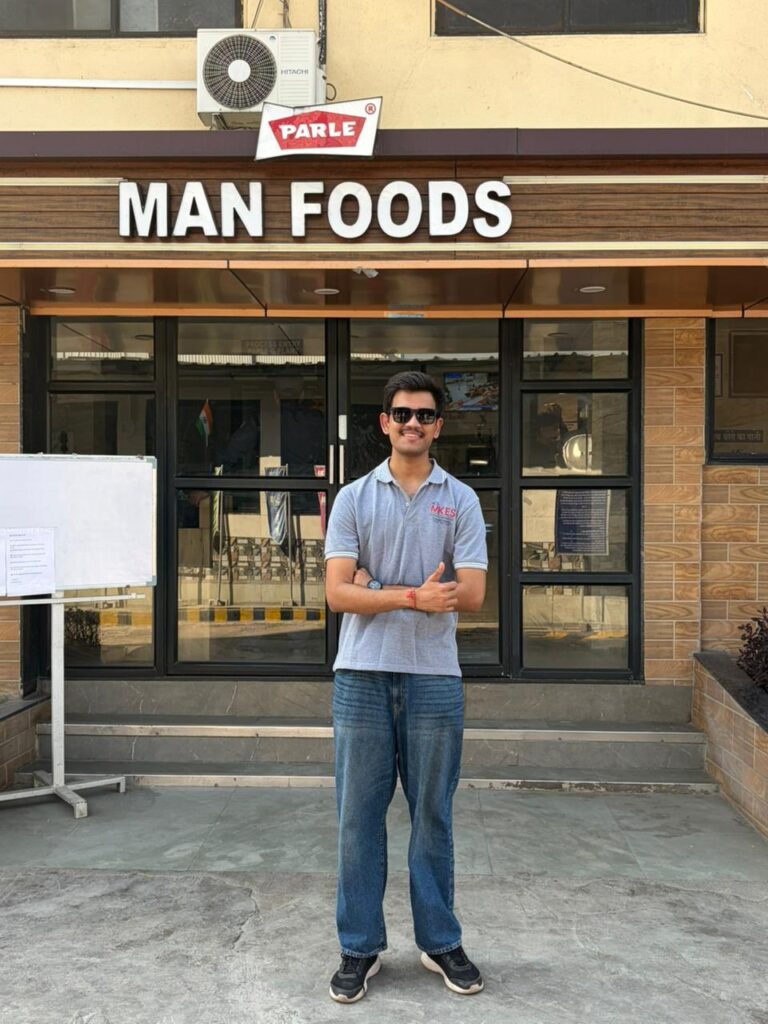
Parle’s Manufacturing Network and Outsourcing Model
Another key learning from the visit was understanding how Parle manages its large-scale production through a combination of owned manufacturing plants and outsourced manufacturing facilities.
Outsourcing allows the company to:
- Increase production capacity
- Expand distribution across different regions
- Maintain consistent product availability
- Optimize operational costs
Manfoods Pvt. Ltd. is one such facility that contributes to producing Parle products while following the brand’s strict quality and manufacturing standards.
Technology and Innovation in Production
The factory showcased how modern technology is transforming FMCG manufacturing. Automated machinery, advanced ovens, and streamlined production lines have significantly improved production speed and efficiency.
Adopting new technologies has helped the company:
- Increase production rates
- Reduce manual errors
- Maintain consistent product quality
- Improve overall operational efficiency
These technological advancements demonstrate how traditional food brands continue to evolve with modern industrial practices.
Understanding Costing and Market Challenges
An important discussion during the visit focused on product costing and market dynamics. We learned how factors such as inflation, raw material costs, and transportation expenses influence product pricing.
Manufacturers often need to adjust product sizes, packaging, or pricing strategies to maintain affordability for consumers while sustaining profitability. This gave us valuable insights into the economic challenges faced by FMCG companies.